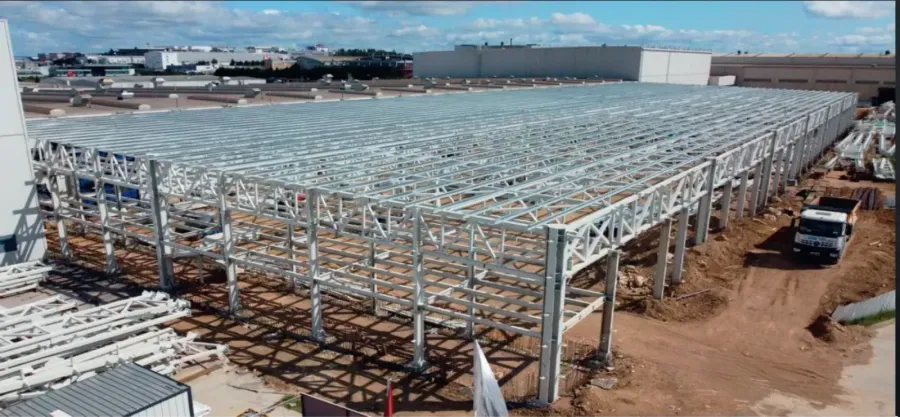
Structural Steel Fabrication and Erection
Primary load-bearing frames, long-span roof trusses and secondary steel members for factory buildings, hangars, terminal structures and warehouse facilities.
We fabricate steelwork for steel factory buildings, steel hangars, terminals and warehouses: columns, beams, steel roof trusses and purlin systems. We produce at 1,500 tonnes a month at our two plants in Kartepe, Kocaeli and erect on site across Türkiye and abroad.
- Execution class
- EN 1090-2 · EXC2 and EXC3
- Welding quality requirements
- EN ISO 3834-2
- Production capacity
- 1,500 t / month · 18,000 t / year
Primary load-bearing frames, long-span roof trusses and secondary steel members for factory buildings, hangars, terminal structures and warehouse facilities.
The use of steel in buildings began in 1779 with the Iron Bridge at Coalbrookdale; today it is the principal load-bearing solution for any industrial investment that needs wide spans, fast erection and predictable cost.
We fabricate and erect primary load-bearing frames, roof trusses and secondary steel members for factory buildings, hangars, terminal structures, warehouses and production facilities. The process begins with 3D modelling and structural analysis, and is completed through shop drawing approval, welded fabrication in the workshop, surface preparation and painting, and finally site erection and handover.
Service Scope
- Fabrication of columns, beams, trusses and purlins
- Long-span roof and space frame systems
- CE-marked fabrication under EN 1090-2
- Surface preparation, primer and top coat
- Site erection, bolting and site welding
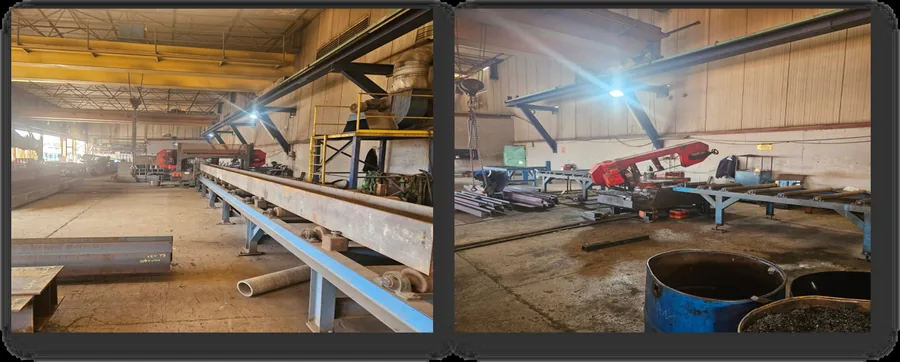
Steel factory buildings, steel hangars and terminals: where structural steel fits
Structural steel is the load-bearing system of choice where wide spans have to be crossed, erection time has to be cut and the weight of the structure has to come down. Factory and production buildings, aircraft hangars, airport terminals, stadium roofs, logistics warehouses and rolling mills are the building types where this need is most acute.
Unlike reinforced concrete, most of the load-bearing members are produced in the workshop, under controlled conditions. The site only erects. That distinction makes the schedule predictable and concentrates quality control at a single point.
What is an execution class (EXC), and how does it affect your project?
EN 1090-2 divides structural steel fabrication into four execution classes: from EXC1 to EXC4, the required level of inspection, weld examination and traceability increases. The class is set by assessing the consequence class, service category and production category of the structure together.
Most industrial buildings fall under EXC2, while structures carrying crane loads and subject to fatigue are generally EXC3. Because the execution class governs everything from the extent of non-destructive testing to welder qualifications, it needs to be settled at the quotation stage.
How does the fabrication process work?
The process begins with material acceptance: an EN 10204 3.1 inspection certificate is obtained for every batch and traceability is established piece by piece. Plasma or oxy-fuel cutting, drilling, assembly and welding follow. Welds are made under approved welding procedures (WPS) by qualified welders.
After fabrication come dimensional control, non-destructive testing and surface preparation. The coating system applied after Sa 2½ blast cleaning is selected according to the ISO 12944 corrosivity category of the structure's environment. A final inspection and a check of the piece list are carried out before dispatch.
Steel roof truss erection and tolerance control
Erection is an engineering task in its own right, separate from fabrication. Crane capacity and position, erection sequence, temporary stability members and working-at-height measures are all defined in advance in the erection plan.
In preloaded connections, bolts are tightened under EN 14399 by a defined torque or part-turn method. Column alignment, level and squareness tolerances are measured as erection proceeds; deviations are corrected before they accumulate.
Material selection: S235, S275, S355
The most common grades in structural steel are S235, S275 and S355 under EN 10025-2. The number gives the minimum yield strength of the material in N/mm². Because S355 offers higher strength, it allows a lighter section to be used for the same load.
The letters JR, J0 and J2 after the grade code indicate the temperature at which impact toughness is verified. In thick sections and at low service temperatures, this choice directly affects the risk of brittle fracture.
References in Structural Steel
A selection of projects fabricated and erected within this service scope.
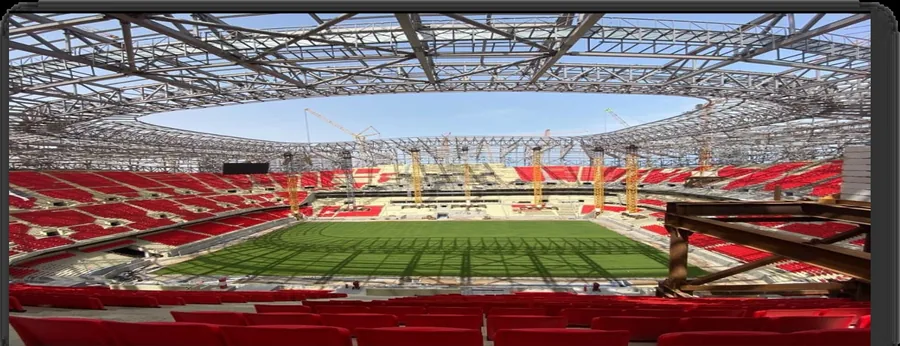 1,350 t / Sports and Events / 2024
King Abdullah Stadium
Completed Projects | {tons} Tonnes of Steel
1,860 t / Automotive / 2019 - 2021
TOGG Automotive Plant - Column and Truss Fabrication
Completed Projects | {tons} Tonnes of Steel
1,350 t / Sports and Events / 2024
King Abdullah Stadium
Completed Projects | {tons} Tonnes of Steel
1,860 t / Automotive / 2019 - 2021
TOGG Automotive Plant - Column and Truss Fabrication
Completed Projects | {tons} Tonnes of Steel
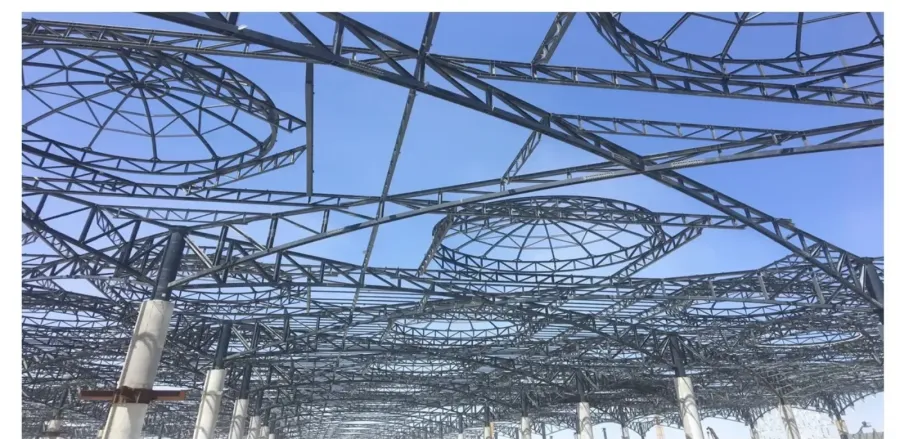 6,500 t / Aviation / 2016 - 2018
Istanbul Airport - Terminal Building
6,500 t / Aviation / 2016 - 2018
Istanbul Airport - Terminal Building
Frequently Asked Questions on Structural Steel
The programme is built around the tonnage, the number of pieces, the coating system and site conditions. Our capacity of 1,500 tonnes a month allows fabrication to run in parallel with the erection sequence; every delivery to site carries the pieces to be erected that week.
Structural steelwork is a product requiring CE marking under the Construction Products Regulation. CE marking rests on EN 1090-1 conformity assessment and the Factory Production Control certificate that goes with it. Uncertified fabrication causes problems in building permit and acceptance procedures.
The ductility of steel allows it to absorb seismic energy through permanent deformation. The low weight of the structure also reduces the seismic force reaching the base. What is decisive is not the material itself but whether the connection details are designed in accordance with ductility rules.
The choice depends on the corrosivity category of the environment and the intended maintenance interval. In enclosed industrial buildings a coating system under ISO 12944 is generally sufficient; outdoors, in coastal areas or in plants with chemical exposure, galvanising or paint over galvanising is preferred.
Request a Quote for Your Project
Fabrication drawings, a tonnage list or a preliminary design is enough. We review the scope and respond with a schedule and pricing.