Process and Energy Pipeline Fabrication
Every stage from spool fabrication to site erection for process and energy pipelines, pipe bridges and in-plant distribution lines.
Process piping, pipeline fabrication and pipe bridge steelwork run under one scope. Spools are fabricated in the workshop so that only closure welds remain on site, which cuts erection time and the need for scaffolding.
- Reference standards
- EN 13480 · ASME B31.3
- Scope
- Spool fabrication, pipe bridge, site erection
- Testing
- Hydrostatic pressure test
Every stage from spool fabrication to site erection for process and energy pipelines, pipe bridges and in-plant distribution lines.
In providing the transmission that is the fundamental requirement of the energy sector, pipelines are the cornerstone of moving natural gas and petroleum products.
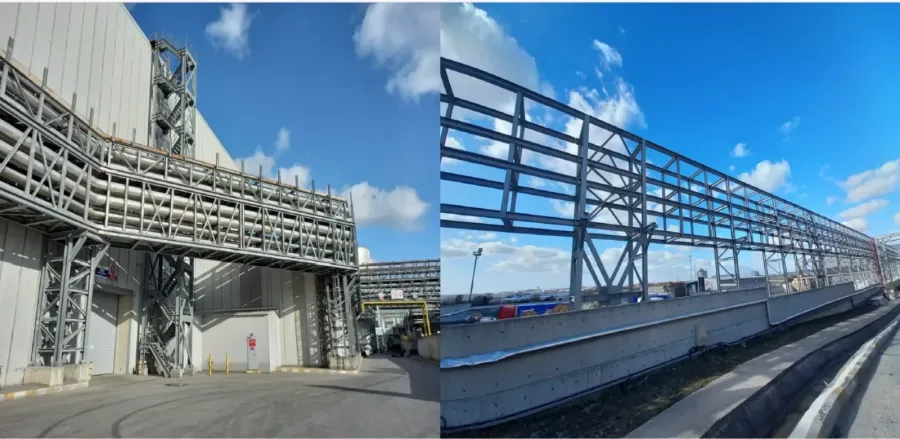
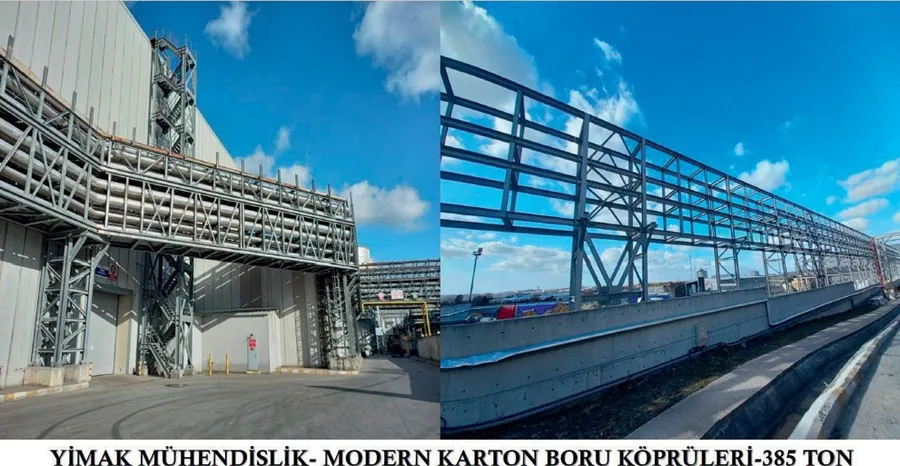
We carry out every stage from spool fabrication to site erection for process pipelines, pipe bridges and in-plant distribution lines. The 260-tonne pipe bridge at the TAMEK Salihli factory is one of our reference works in this field.
Service Scope
- Process and energy pipeline fabrication
- Pipe bridge steelwork and erection
- Spool fabrication in the workshop, joining on site
- Welding procedure and welder certification
Process piping or energy transmission line?
Pipelines are subject to different standards depending on the fluid they carry and their operating conditions. In-plant process lines are generally assessed under EN 13480 or ASME B31.3, while long-distance transmission of natural gas and petroleum products brings different design criteria into play.
The choice of standard is not a formality: design pressure, material selection, the extent of weld examination and the test pressure all follow directly from it.
Spool fabrication: moving site work into the workshop
Efficiency in pipework rises as the amount of welding done on site falls. The line is therefore divided, on the basis of isometric drawings, into pre-assembled pieces known as spools, and these are welded in the workshop on rotating positioners.
Workshop welding is both higher in quality and easier to inspect. Only the spool closure welds are left for site, which reduces erection time and the need for scaffolding.
Pipe bridge steelwork
Pipe bridges, used to carry lines across a plant, involve the structural steel and the piping disciplines at the same time. The load-bearing frame of the bridge has to carry thermal expansion, wind and maintenance loads as well as the weight of the pipes.
The 260-tonne pipe bridge we fabricated and erected at the TAMEK Salihli factory is an example of the advantage that running both disciplines from a single source brings to site coordination.
Welding, inspection and pressure testing
Every weld rests on an approved welding procedure (WPS) and a qualified welder. Procedures are verified under EN ISO 15614-1 and welder qualifications under EN ISO 9606-1.
The extent of inspection is determined by the class of the line; radiographic and ultrasonic testing are the most common methods. The process is completed with a hydrostatic test at the defined pressure and the handover of the test report.
References in Piping Systems
A selection of projects fabricated and erected within this service scope.

Frequently Asked Questions on Piping Systems
Yes. We fabricate both carbon steel and stainless steel lines. In stainless fabrication, separate equipment and a separate working area are used to prevent cross-contamination with carbon steel.
We can work from a design supplied by the client, and we can also take on the detail engineering where the work is still at concept stage. The scope is settled at the quotation stage.
The design pressure of the line, the hazard class of the fluid it carries and the standard it is subject to determine the examination rate. The rate is set down in writing in the inspection plan before fabrication starts.
Request a Quote for Your Project
Fabrication drawings, a tonnage list or a preliminary design is enough. We review the scope and respond with a schedule and pricing.