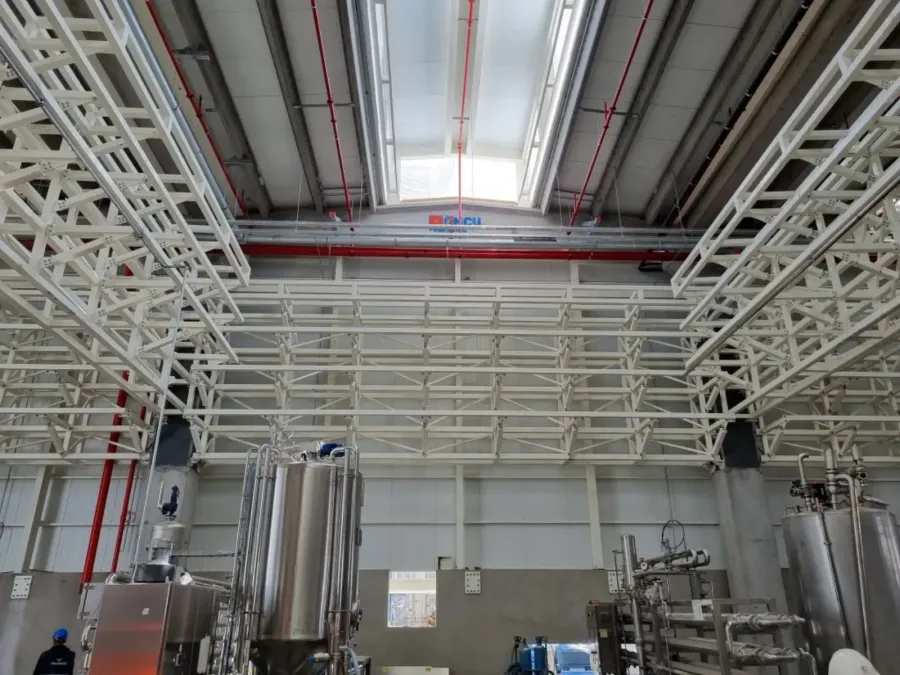
Pressure Vessel Manufacturing
Closed vessels operating at 0.5 bar and above: equipment calculated, fabricated and tested within the framework of ASME BPVC and PED 2014/68/EU.
Pressure vessel manufacturing covers air receivers, heat exchangers, separators and reactors — closed equipment operating above 0.5 bar. For every pressure tank, the calculation, material certificate, welding procedure, non-destructive testing and hydrostatic test record are handed over in the fabrication file.
- Directive
- PED 2014/68/EU
- Design standard
- ASME BPVC Section VIII · EN 13445
- Scope
- Closed vessels at 0.5 bar and above
Closed vessels operating at 0.5 bar and above: equipment calculated, fabricated and tested within the framework of ASME BPVC and PED 2014/68/EU.
Pressure vessels, defined as closed vessels operating at pressures of 0.5 bar and above, are standardised by ASME BPVC and by Directive PED 2014/68/EU.
Calculation and material selection before fabrication, approval of welding procedures, non-destructive testing during fabrication and hydrostatic testing at the final stage — every step is carried out and documented.
Service Scope
- Fabrication under ASME BPVC and PED 2014/68/EU
- Welding procedure approval and non-destructive testing
- Hydrostatic testing and handover of the fabrication file
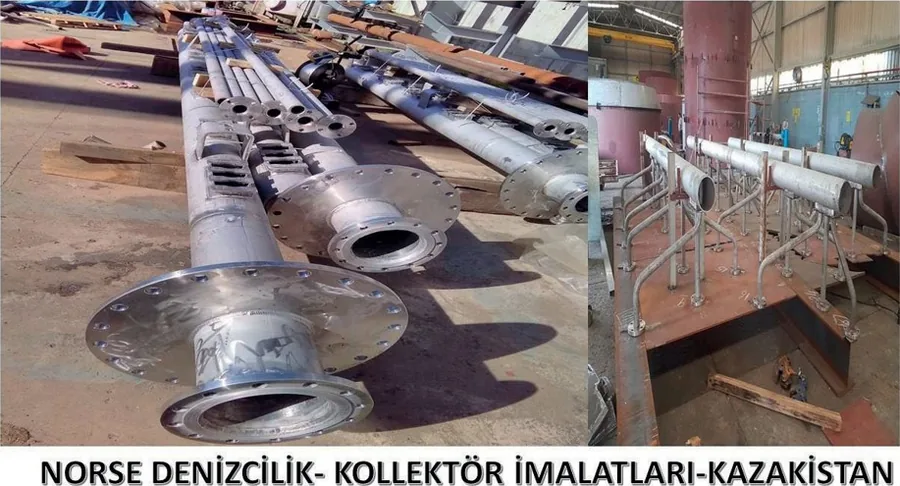
Which equipment does pressure vessel manufacturing cover?
Closed vessels operating at pressures of 0.5 bar and above are defined as pressure vessels and are standardised by ASME BPVC and by Directive PED 2014/68/EU. Air receivers, heat exchangers, separators, reactors and steam boiler auxiliaries all fall within this scope.
Falling within the scope means that every step from design to handover is documented. These documents are kept for the life of the equipment and are referred to at periodic inspections.
How is the PED category determined?
PED divides equipment into categories from I to IV according to the hazard group of the fluid, the pressure and the volume. The higher the category, the greater the role of the notified body in conformity assessment.
The category has to be established at the design stage, because the module to be applied, the extent of inspection and the documentation required all follow from it. Changing category later is costly.
Pressure tank calculation, material selection and fabrication
Shell and head thicknesses are calculated taking design pressure, temperature and corrosion allowance into account. Pressure vessel quality plate is used in material selection and an inspection certificate is required for every batch.
During fabrication, the position and sequence of weld seams and, where required, post-weld heat treatment (PWHT) are planned. All welds are made under approved procedures by qualified welders.
Inspection, testing and the fabrication file
Weld seams are subjected to radiographic or ultrasonic testing at a rate determined by the category. Penetrant or magnetic particle testing is applied for surface defects.
The process is completed with a hydrostatic test above the design pressure. Material certificates, welding procedures, inspection reports and the test record are handed over as the fabrication file.
Frequently Asked Questions on Pressure Vessels
CE marking is required for equipment falling within the scope of PED 2014/68/EU. In Category I the manufacturer may proceed on its own declaration, while in the higher categories a notified body has to take part in the conformity assessment.
No. The requirement is set by the material type, the thickness and the rules of the design standard. It is applied on thick sections and with certain materials in order to relieve residual stresses.
Design pressure and temperature, fluid type, volume, a list of nozzles and the applicable standard are enough. The category is established from this information and a quotation is prepared.
Request a Quote for Your Project
Fabrication drawings, a tonnage list or a preliminary design is enough. We review the scope and respond with a schedule and pricing.