The question is usually asked in terms of cost, yet what is decisive is span, schedule and how the building will change in the future.
In an industrial investment, the choice of load-bearing system is not a decision that can be made by looking at cost per square metre alone. In most projects the four points below settle it on their own.
Span requirement
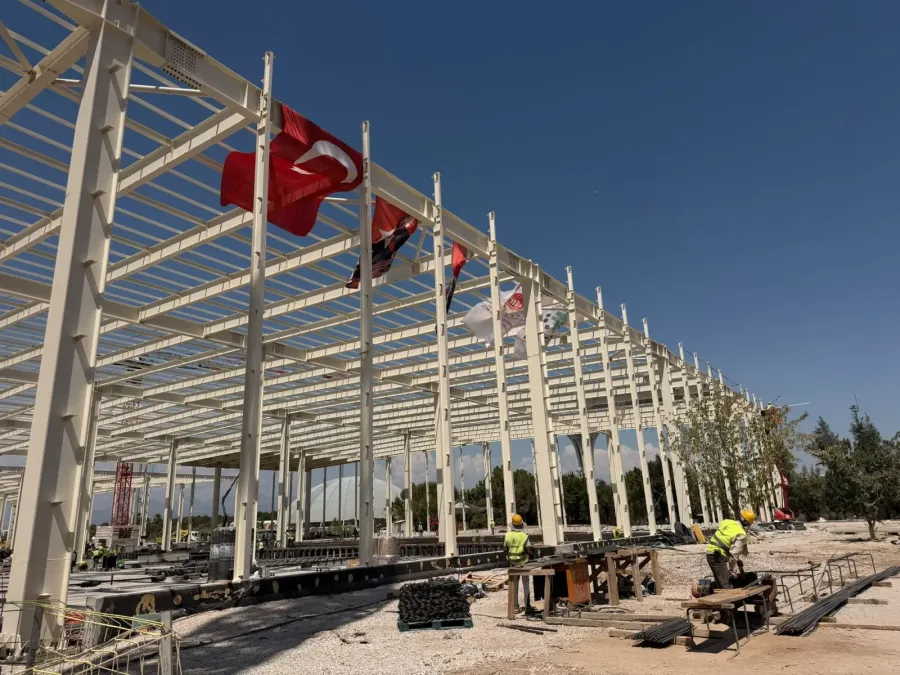
The column-free area the production line needs is the criterion that most influences the choice. In reinforced concrete, sections and formwork costs rise rapidly as the span grows; in steel, the same span is crossed more lightly by increasing the depth of the truss.
Above 20 metres, steel is usually the only reasonable solution.
Erection time and schedule risk
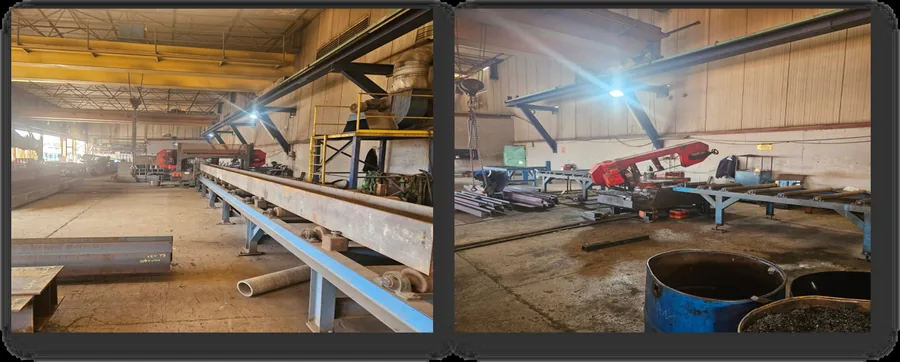
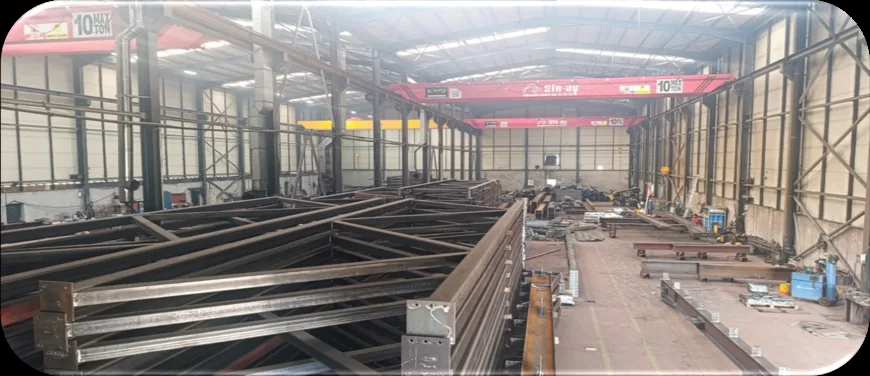
In a steel structure, most of the load-bearing members are produced in the workshop, independently of the weather. The site only erects. That distinction makes the schedule predictable.
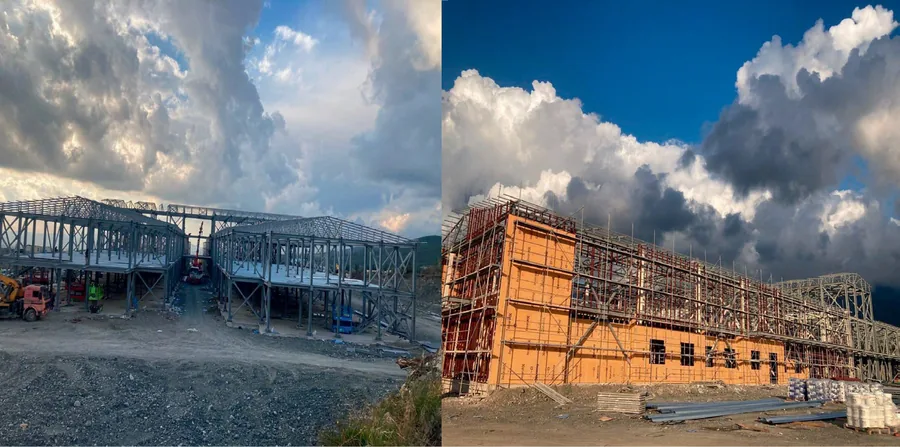
In reinforced concrete, formwork, reinforcement, pouring and curing times all wait on one another, and winter conditions bear directly on the programme. On investments with a fixed commissioning date, this difference is decisive.
Seismic performance and structural weight
The ductility of steel allows it to absorb seismic energy through permanent deformation. The low weight of the structure also reduces the seismic force reaching the base.
What is decisive is not the material itself but whether the connection details are designed in accordance with ductility rules. A steel connection that is not detailed correctly cancels out the advantage.
Future change
Industrial buildings rarely stay as they are: lines grow, cranes are added, buildings extend. In a steel structure, adding a bay means a new frame bolted to the existing steelwork.
In reinforced concrete the same operation is far more constrained. If there is any prospect of expansion within the ten-year horizon of the investment, that flexibility more than covers the difference in first cost.