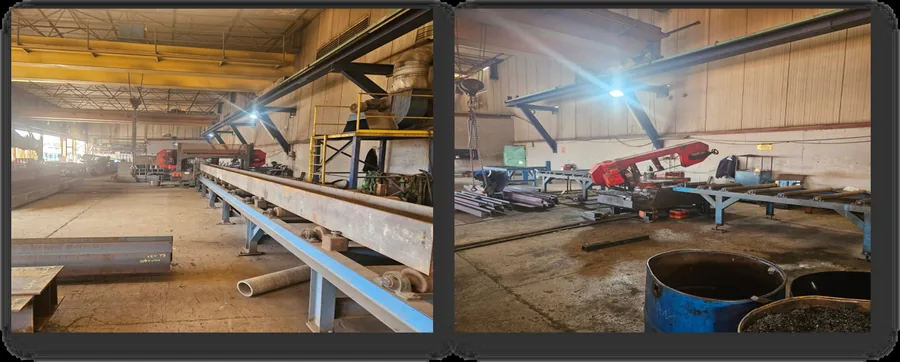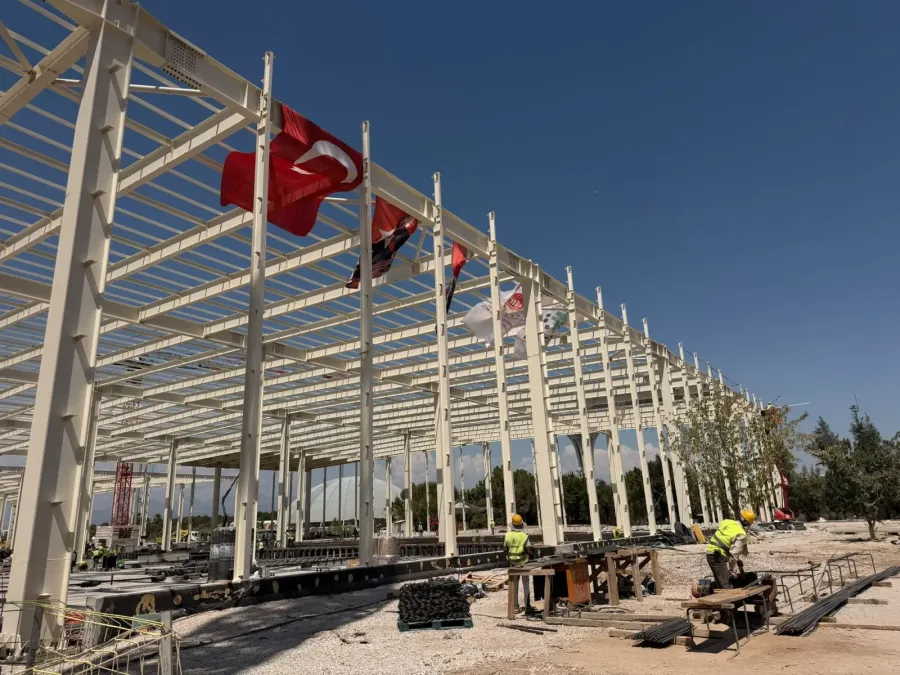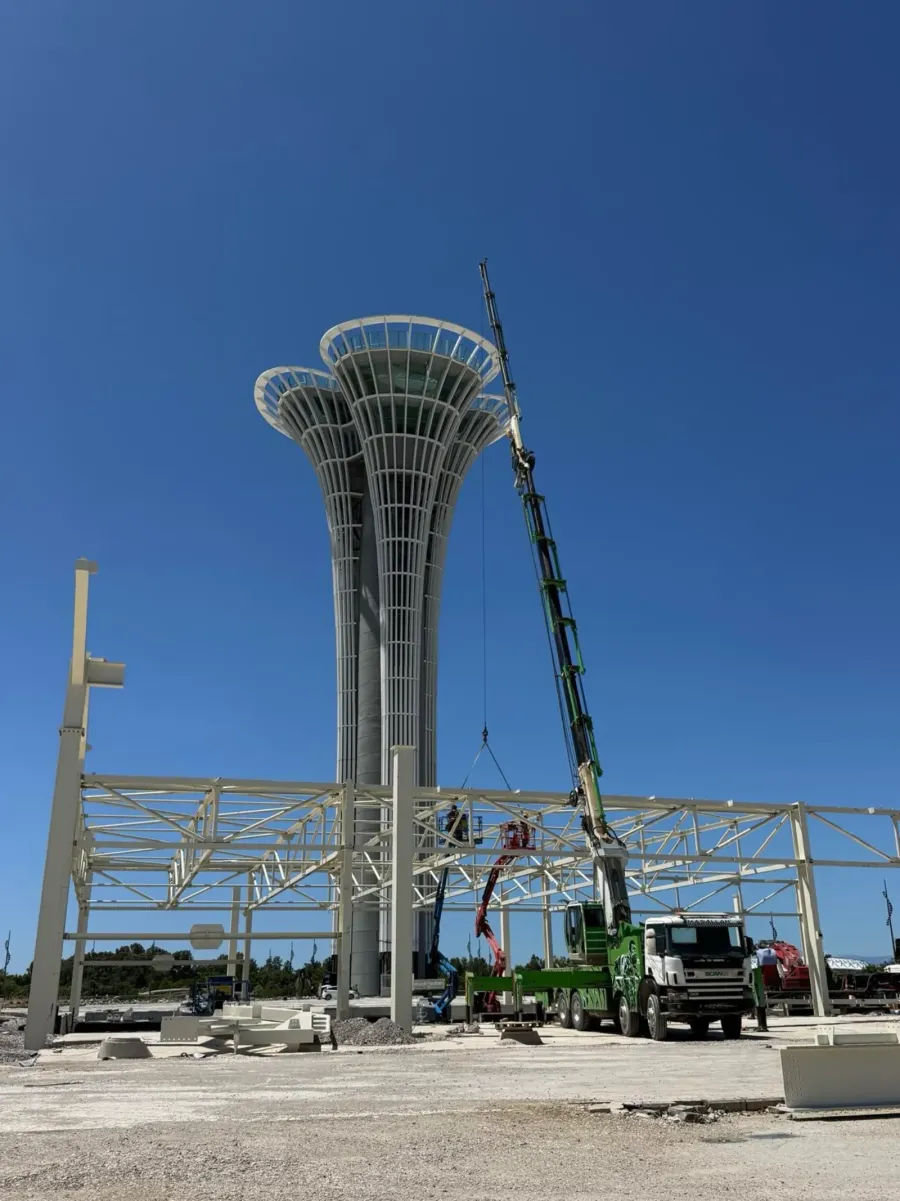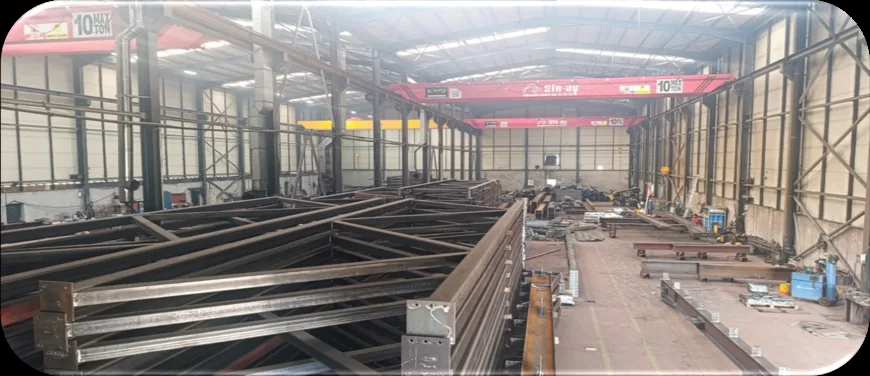
The crane runway beam is the hardest-working member in an industrial building. While every other load-bearing element is loaded a few hundred times in its life, the runway beam is loaded and unloaded millions of times.
A factory roof is stressed a countable number of times by snow and wind over its design life. A crane runway beam sees dozens of cycles per shift and hundreds of thousands per year. That difference turns the beam from a static problem into a fatigue problem, and the rules for design, fabrication and inspection change accordingly.
Where does fatigue damage start?
A fatigue crack starts not where the stress is highest but where the stress concentration is sharpest. In practice that is the end of a weld run: stiffener ends, the web-to-flange junction, the weld crater and abrupt changes of section.
On crane runway beams the weld detail therefore matters more than the weld quality. Details such as where the stiffener meets the top flange, grinding out weld starts and stops, and easing the toe of the run delay the onset of cracking by years.
Intermittent welding is an economical choice on statically loaded members; on a crane runway beam subject to fatigue, every weld stop is a candidate crack. Continuous welding is generally compulsory.
Why does the execution class rise?
In setting the service category, EN 1090-2 looks at whether the structure is subject to static load or to dynamic load causing fatigue. A crane runway beam is by definition in the second group, which is why the roof of the same building may be under EXC2 while the runway beams are generally fabricated under EXC3.
The practical consequence is this: the extent of non-destructive testing rises, welding procedures are approved to tighter limits, material traceability descends to the individual piece and dimensional tolerance limits narrow. All of this raises cost, and none of it is optional.
Stating at the quotation stage that the crane runway beams fall in a separate execution class closes off a scope dispute before it can open.
Rail alignment and level tolerance
On a crane runway beam, dimensional tolerance is a functional requirement, not a cosmetic one. The difference in span between the two rails, the difference in level between them and any deviation of the rail from its vertical axis all generate lateral force in the crane wheels.
That lateral force shows up in two places: rapid wear on the wheel flanges and unexpected torsion in the beam. Together they produce a fatigue load that appears nowhere in the calculation. A few millimetres overlooked during erection come back five years later as a rail replacement.
Rail alignment is therefore measured not at the end of erection but as erection proceeds; deviations are corrected before they accumulate. Having the measurement records in the handover file gives the operator a reference for subsequent periodic inspections.
What is different in rolling mills and heavy industry?
Rolling mill buildings are the most demanding case of crane runway beam design: heavy crane loads, high clear height requirements and wide spans come together in the same structure. As the duty class rises, so do the cycle count and the load spectrum.
Temperature effects also come into play in these buildings. On a line carrying hot material, the thermal expansion the beam undergoes requires the support detail to allow free movement. A support held rigid produces an axial force that is nowhere in the calculation.
What is checked at periodic inspection?
Once commissioned, the crane runway beam is the element of the structure that most needs monitoring. At the annual inspection, weld terminations are examined visually and critical points by magnetic particle or penetrant testing.
Loosening of the rail fixings, the rail wear profile and paint lifting on the bottom flange of the beam are also early warning signs. These checks allow intervention before a crack grows to threaten the section; a local strengthening done in time is far cheaper than a complete replacement.